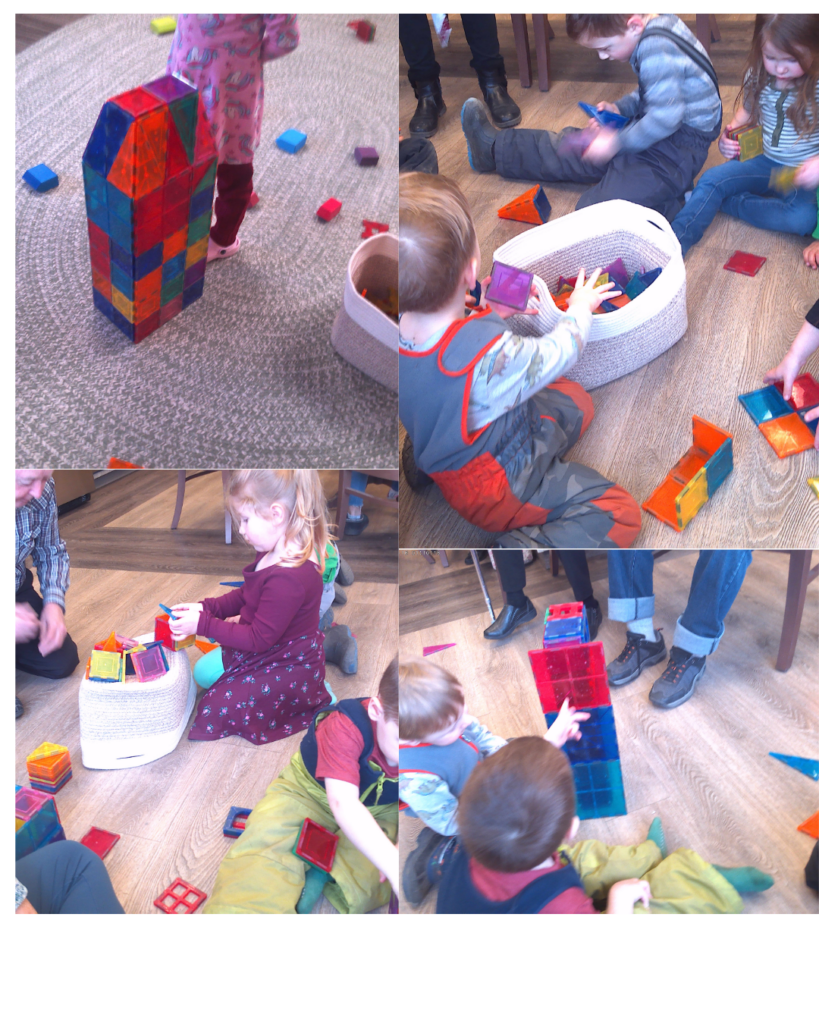
During my first week of Practicum 3, I immediately noticed that this child development centre felt different from my previous placements. The environment strongly supports children’s curiosity, creativity, independence, and positive risk-taking. Children confidently carried large wooden blocks, built tall structures, climbed, jumped, and engaged in physically challenging play. This reflects the image of the child described in Encounters with Materials, where children are viewed as capable, competent, and active participants in their learning. Materials such as wooden blocks were not simply tools, but relational partners shaping children’s thinking and experimentation.
Throughout the week, construction emerged as a dominant interest. Children consistently built houses, rockets, and imaginative structures, often connecting their play to family and community experiences. Their ongoing conversations about buildings during walks demonstrate how learning extends beyond classroom walls, aligning with Common Worlds: Reconceptualizing Inclusion (Taylor & Giugni, 2012), which encourages educators to situate children’s learning within shared community and environmental contexts.
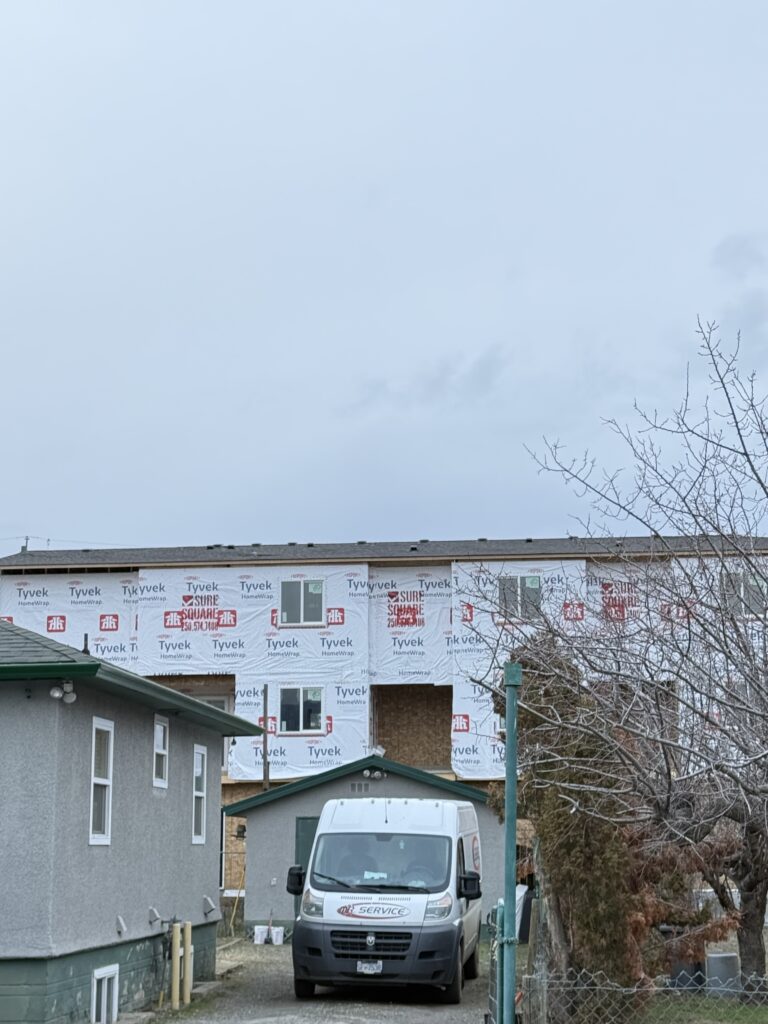
Child: Look! I’m making a tall building like the one outside!
ME: I see that. You noticed the new building in front of our daycare?
Child: Yes! It’s so big. Mine is big too!
ME: How are you making yours strong?
Child: I’m putting the big tiles at the bottom so it doesn’t fall.
ME: That’s smart thinking just like real builders. Do you think your building is a house or something else?
Child: It’s a house… and maybe a hotel!
ME: A house-hotel! I love that idea. I wonder how tall we can build it before it touches the sky.
Risk-taking was normalized within the centre. Children jumped from heights, rolled tires, and swung high with confidence. Rather than restricting these experiences, educators appeared to view them as opportunities for resilience and agency. This approach aligns with the ethical-political framing of early childhood education discussed in Pedagogists and Educators Engaging in Ethical-Political Dimensions in Early Childhood Education (2025), which positions educators as responsible for creating environments that support children’s autonomy and participation.
As the week progressed, children began including me in their routines through conversations, hugs, and requests for help. These moments highlighted the relational dimension of pedagogy discussed in What is Pedagogy? (Vintimilla, 2020), where pedagogy is understood as ethical and relational work rather than simply delivering activities. I also observed varying educator styles, including moments of dominance and frustration, which influenced the emotional climate of the classroom. This observation invites educators to critically reflect on how pedagogical choices shape children’s experiences.
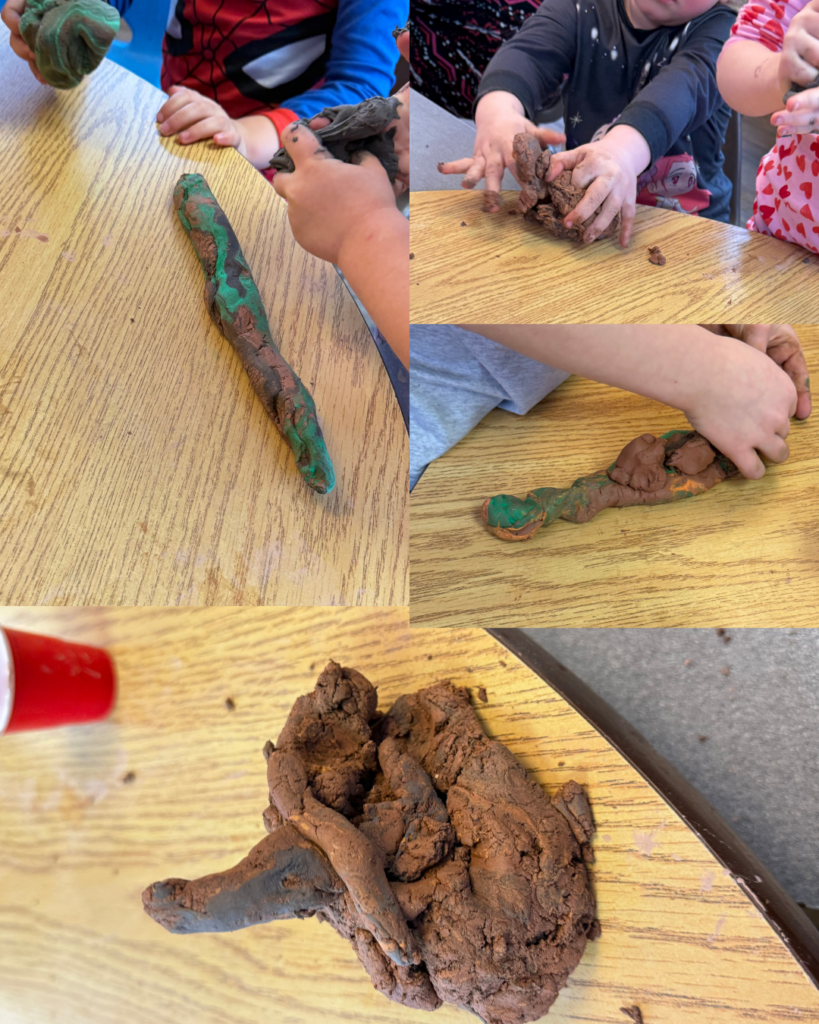
To extend this emerging interest, I introduced clay as a material to further explore children’s ideas about buildings. Clay offered a different sensory and structural experience compared to blocks and magnet tiles. Children used clay to mold houses, create walls, shape roofs, and design structures with greater detail. This experience strongly connects with Materials in Early Childhood Education, which highlights how materials invite transformation, experimentation, and meaning-making. Clay allowed children to think differently about balance, stability, and form. It also resonates with Chapter 4 of Journeys, where pedagogical narration encourages educators to follow children’s emerging interests and deepen inquiry rather than introducing unrelated activities. Through clay, I was able to build on their construction interest instead of redirecting it.
A particularly meaningful experience was visiting an old age home, where children engaged in coloring and building with elderly residents. This intergenerational interaction demonstrated empathy, care, and relational understanding. Such experiences align with relational and community-based perspectives presented across course readings, particularly in Land as First Teacher, which emphasizes learning as embedded within relationships, land, and community.
Overall, my first week deepened my understanding of the center’s philosophy and strengthened my awareness of children’s strong interest in construction play, the importance of supporting positive risk-taking, and the ethical responsibility of building meaningful relationships. I am beginning to think more pedagogically, reflecting not only on what children are doing, but on how materials, environments, and educator interactions shape their experiences.
During my second week, I intentionally extended children’s strong interest in buildings and houses by introducing a variety of open-ended materials including books, popsicle sticks, cotton, large wooden blocks, and drawing invitations.
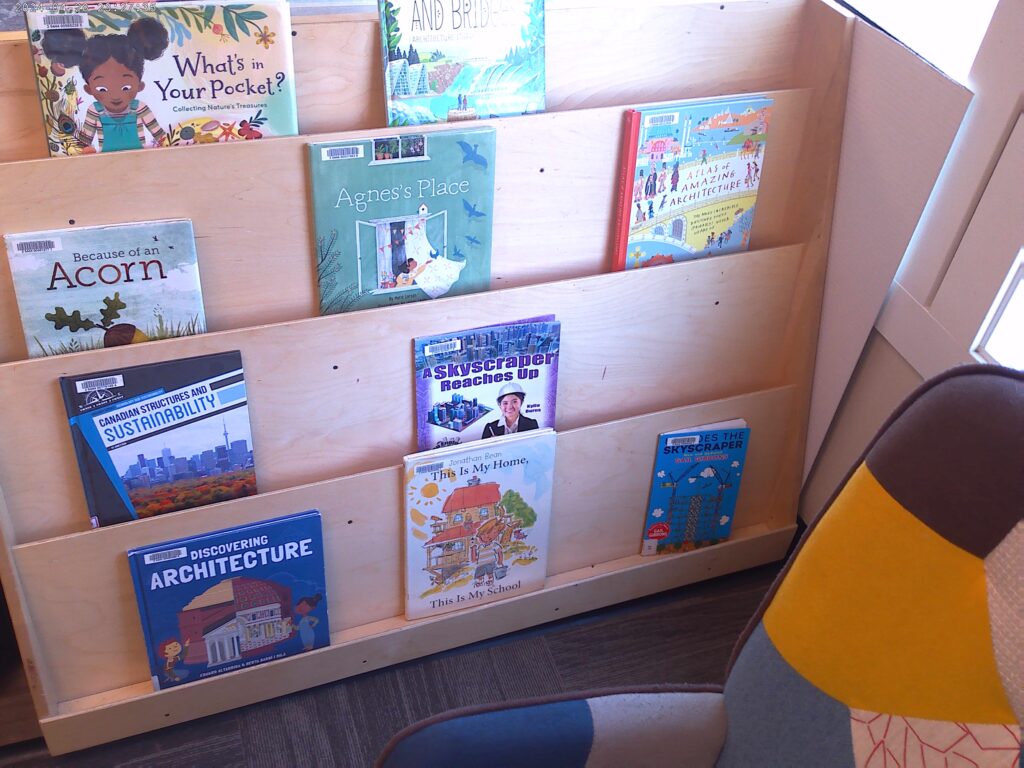
To deepen their thinking, I brought 12 books related to houses, buildings, architecture, religion, and Indigenous homes and histories. These included both fiction and non-fiction texts. The books became more than reading material; they acted as provocations. Children revisited them repeatedly and used them to inspire their own representations of structures. This approach aligns with Encounters with Materials, which invites educators to see materials including books, as active participants in thinking. The books created space for imagination, cultural awareness, and relational understanding of place. This also connects to Land as First Teacher, as children engaged with ideas of home, land, and belonging through different architectural forms.
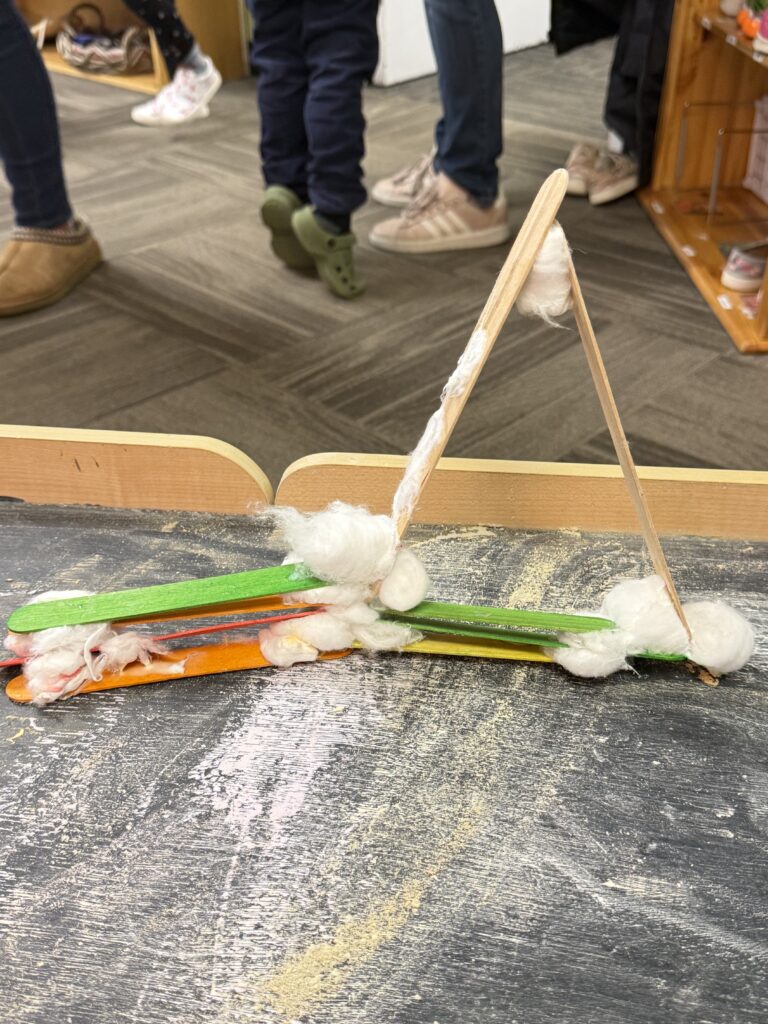
The following day, I introduced popsicle sticks and cotton as open-ended materials. Children explored freely. One child shared her personal memory of visiting the Eiffel Tower and recreated it using popsicle sticks. Another built her own house, and another created a princess castle.
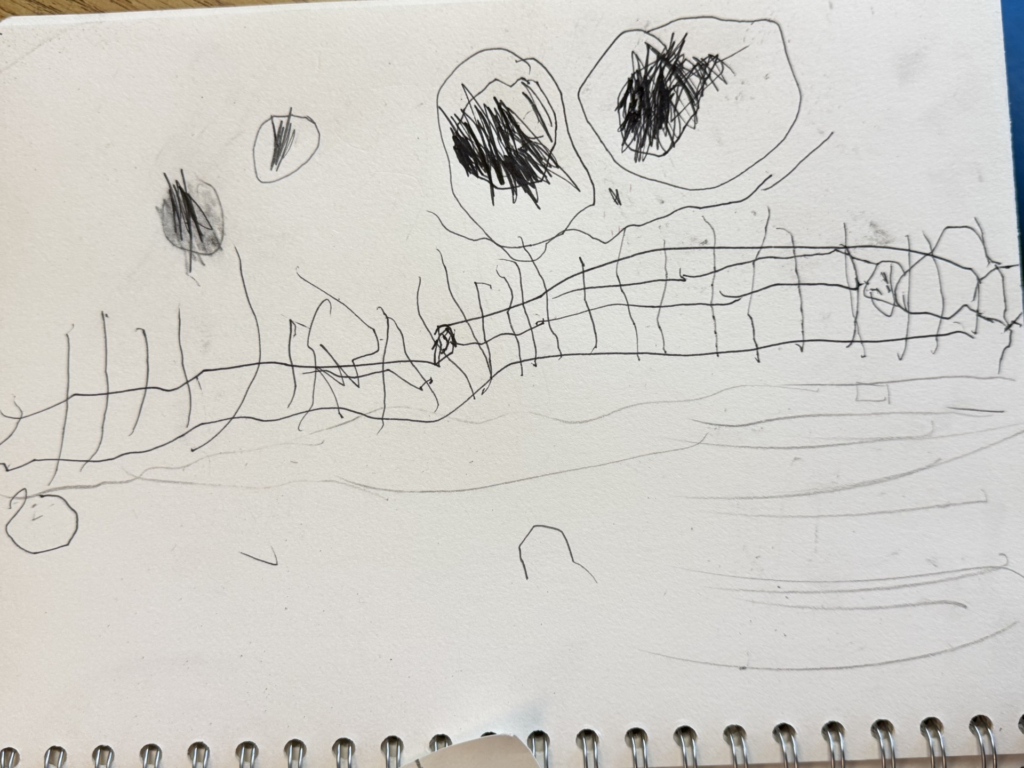
Child: Did you see the Eiffel Tower picture in the book?
Educator (Me): Yes, I did! It looks very beautiful.
Child: I have been to the Eiffel Tower with my parents.
Me: Oh, have you? That’s amazing! I wish I could go there one day. What was it like?
Child: It’s very tall! We had to climb very huge ladders.
Me: Wow, that sounds like a big climb! Did they have an elevator too?
Child: No, they don’t.
Me: Oh! That must have made it feel like a big adventure. Was there anything at the top?
Child: Yes! There was a flag on the top of the Eiffel Tower.
Me: Was it the flag of France?
Child: Yes, it was!
Me: That’s wonderful. What was inside the Eiffel Tower?
Child: There were big castles and paintings… I don’t remember other things. I was just turning four.
Me: That’s okay. You were very little then. It sounds like a very special memory with your family. Maybe we can look at more pictures and learn more about the Eiffel Tower together.
Child: Yes!
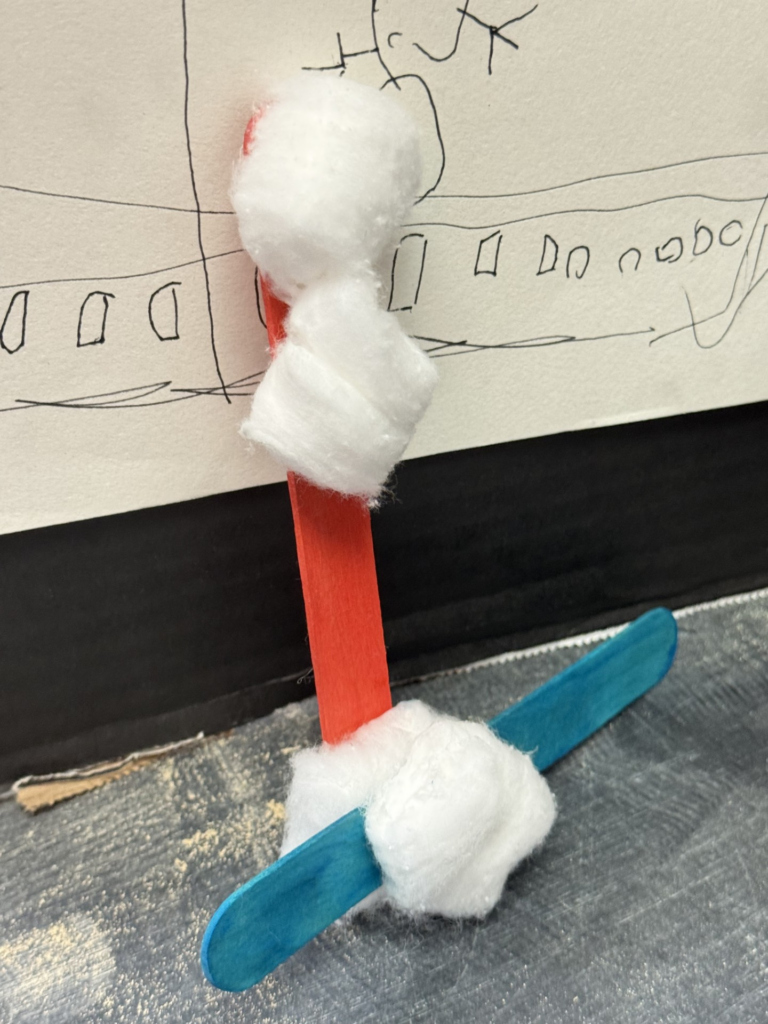
Child: I’m making a princess castle.
Me: Oh, a princess castle! Tell me about it.
Child: Princesses always have big castles because they are rich. It is a very big castle.
Me: I see you’re building it very tall and wide. What makes it a princess castle?
Child: Because princesses have everything! They have big rooms and shiny things.
Me: Big rooms and shiny things that sounds grand. Who lives in this castle with the princess?
Child: Just the princess. And maybe guards.
Me: Guards? That sounds important. What do they do?
Child: A bad guy will come and get her, so I am making a big castle to hide her. Then she will be safe.
Me: You’re thinking carefully about how to keep her safe. What parts of the castle will help protect her?
Child: Very tall walls. And a big door that locks.
Me: A strong door and tall walls, those are great ideas. Is there a secret place she can hide too?
Child: Yes! A secret room at the top. Only she knows.
Me: That’s very clever. She must feel very safe in the castle you are building for her.
Child: Yes, she will be safe.
Me: I notice you are working really hard to protect her. You are thinking like an architect and a protector at the same time.
Child: I am!
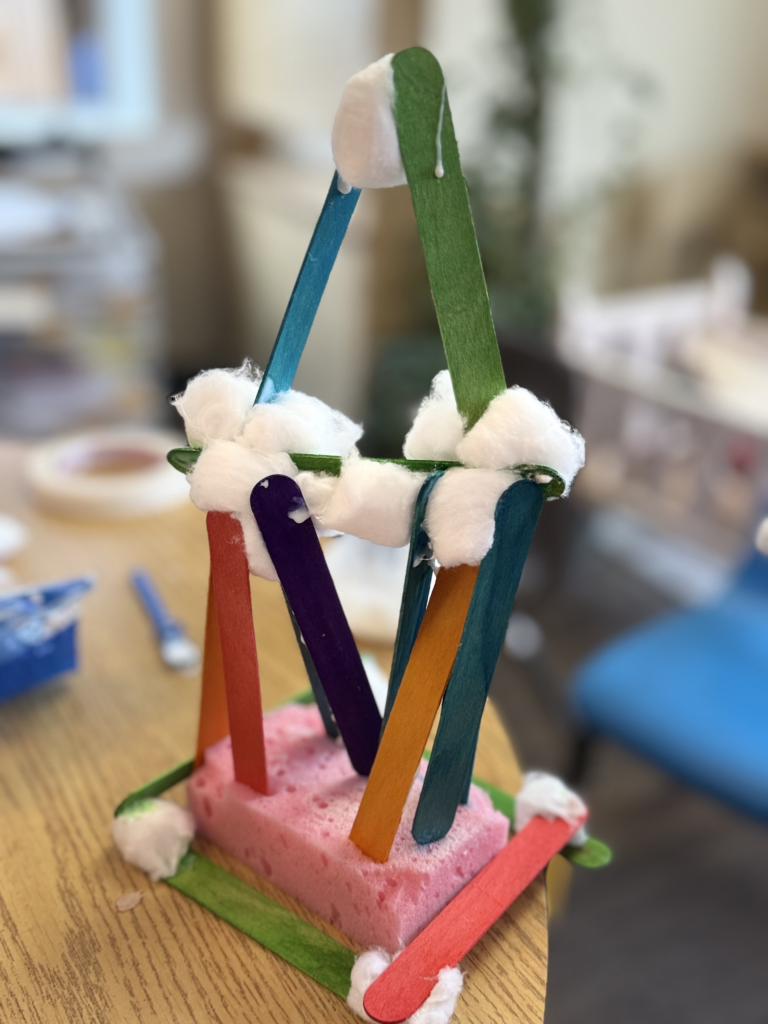
These moments clearly demonstrated children’s symbolic thinking, memory recall, spatial awareness, and imagination. The materials did not dictate outcomes; instead, children transformed them according to their lived experiences and ideas. This reflects Re:materia and the idea that materials are relational and generative rather than passive tools. This week reinforced my belief that children are capable of complex intellectual work. They are not waiting for adult instruction, they are theorizing, remembering, designing, and constructing meaning independently.
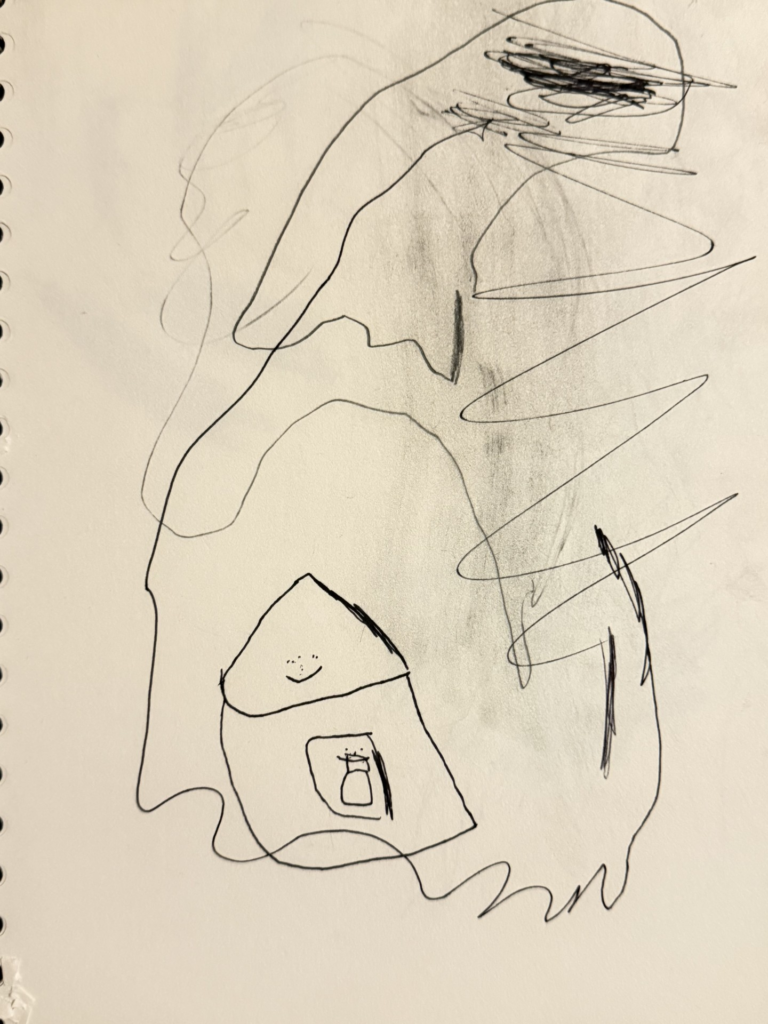
This is the drawing of the girl and she drew her father and her house. She made her house talking about her father using popsicle , cotton and glue.
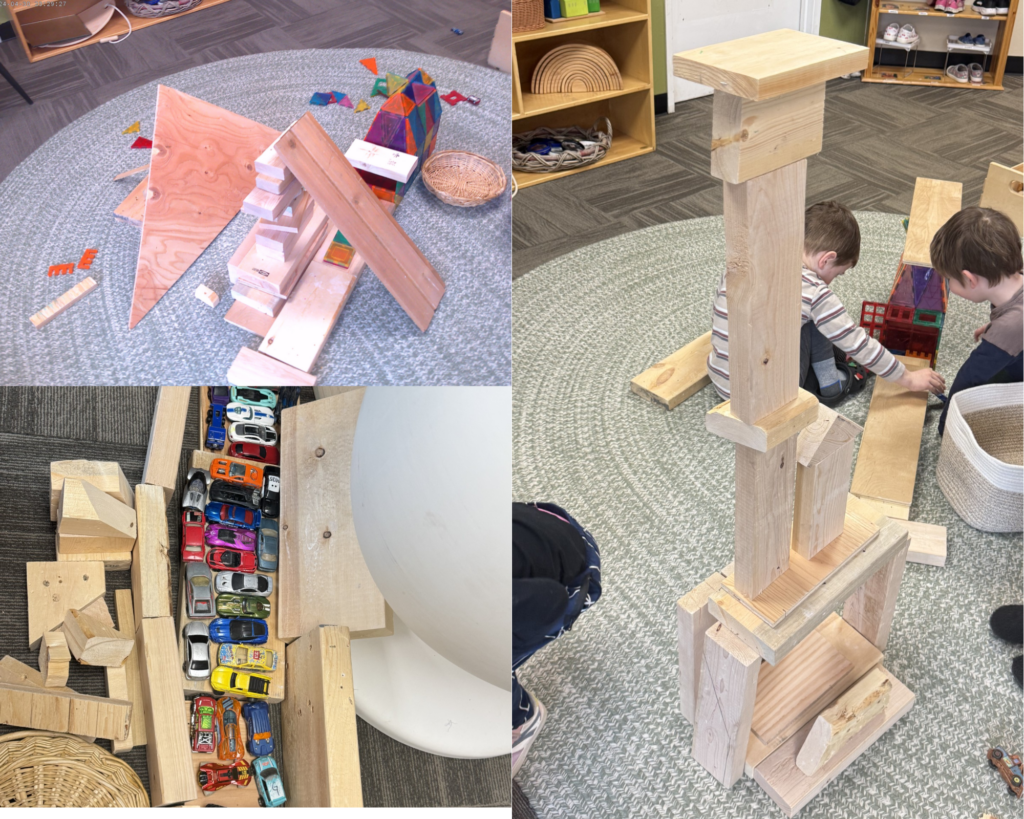
When I introduced large wooden blocks, engagement deepened significantly. All children participated in collaborative building. They constructed houses, airports, car parking areas, and other imaginative structures. The blocks remained central throughout the week. The collaborative nature of this play reflected what is discussed in Journeys: Reconceptualizing Early Childhood Practices through Pedagogical Narration (Pacini-Ketchabaw et al., 2015). When educators slow down and attend to children’s processes, we begin to see sophisticated negotiation, planning, persistence, and collective problem-solving. Children negotiated space, roles, and structure stability. They demonstrated leadership, resilience, and shared thinking. These are capabilities that sometimes even adults struggle to coordinate collectively.
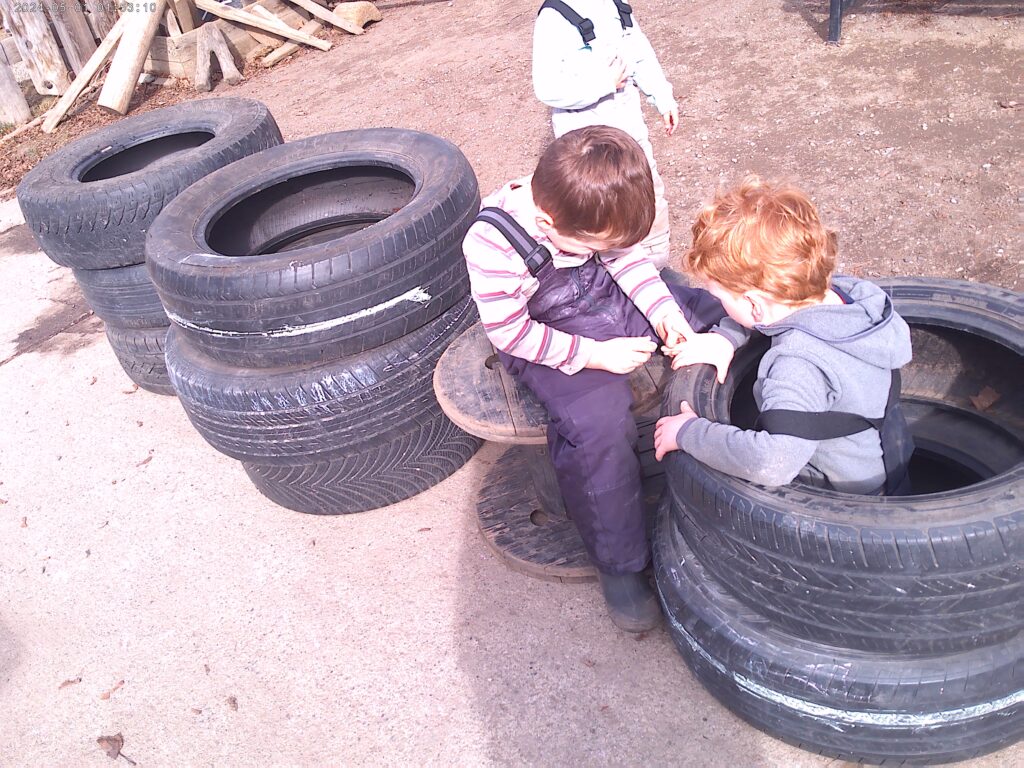
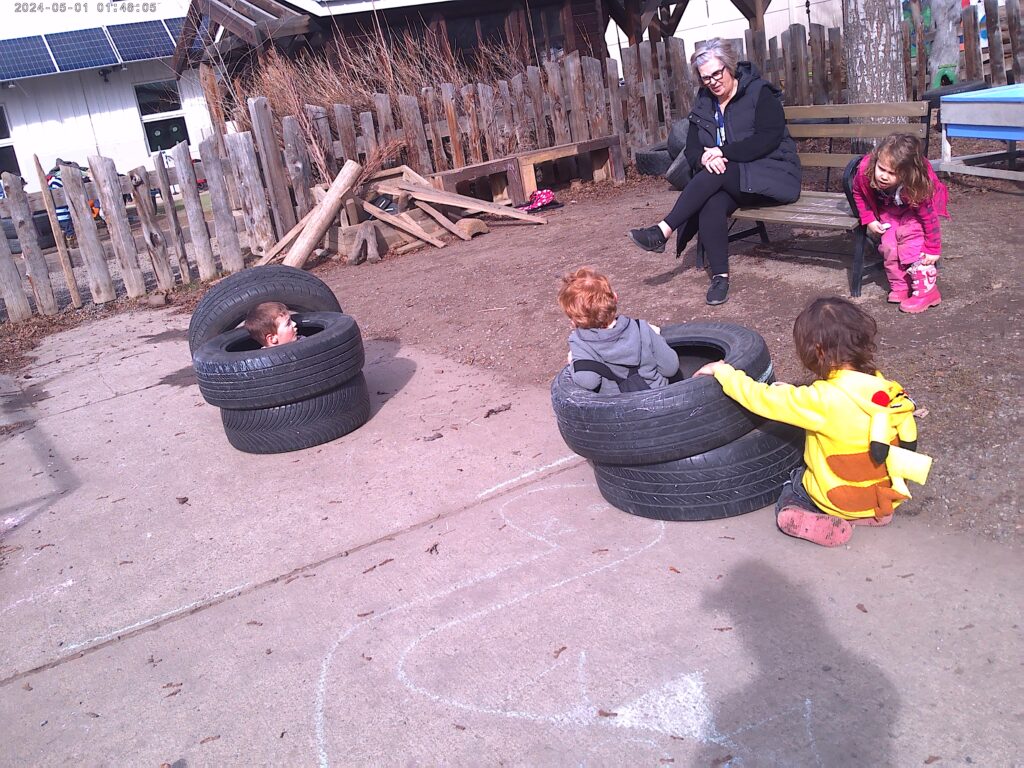
Children’s interest in houses extended outdoors into the yard. During outdoor play, they used large tires to construct “tire houses.” They arranged the tires to create enclosed spaces and then used chalk to color and decorate their houses. They proudly showed their creations and happily played around and inside their tire homes. This outdoor experience connects strongly with Land as First Teacher, as children engaged with space, land, and environment as co-participants in learning. The yard became more than a playground, it became an architectural and imaginative landscape. The use of chalk also connects to Relational Languages of Mark Making (ECPN, 2025). Children used color and drawing to claim, design, and express ownership of their spaces. Their chalk markings were not decoration alone; they were communicative acts expressing identity, belonging, and creativity. The joy and pride they expressed while playing in their tire houses further affirmed that children construct meaning through embodied, relational experiences with materials and space.
Later, I introduced structured building project cards. Although children explored them, they found them more challenging and less engaging than open-ended materials like blocks and popsicle sticks. This experience led me to reflect critically through Beyond Quality in Early Childhood Education and Care. When learning becomes overly structured or outcome-focused, it can close pedagogical possibilities. In contrast, open-ended materials create “openings,” as discussed in Weaving Pedagogy in Early Childhood Education (Pacini-Ketchabaw & Vintimilla, 2020), allowing children’s ideas to unfold without limitation.
I intentionally invited children who do not nap to engage in drawing at the table. What began as a quiet activity gradually evolved into detailed building projects through drawing. This connects strongly to Relational Languages of Mark Making and The Night Butterfly, Drawing as Language. Drawing became an intellectual and communicative language. Children represented homes, architectural details, and imagined structures. Their marks were thoughtful expressions of theory, design, and imagination. I came to see clearly that children’s drawings are not random scribbles, they are meaningful representations of their thinking.
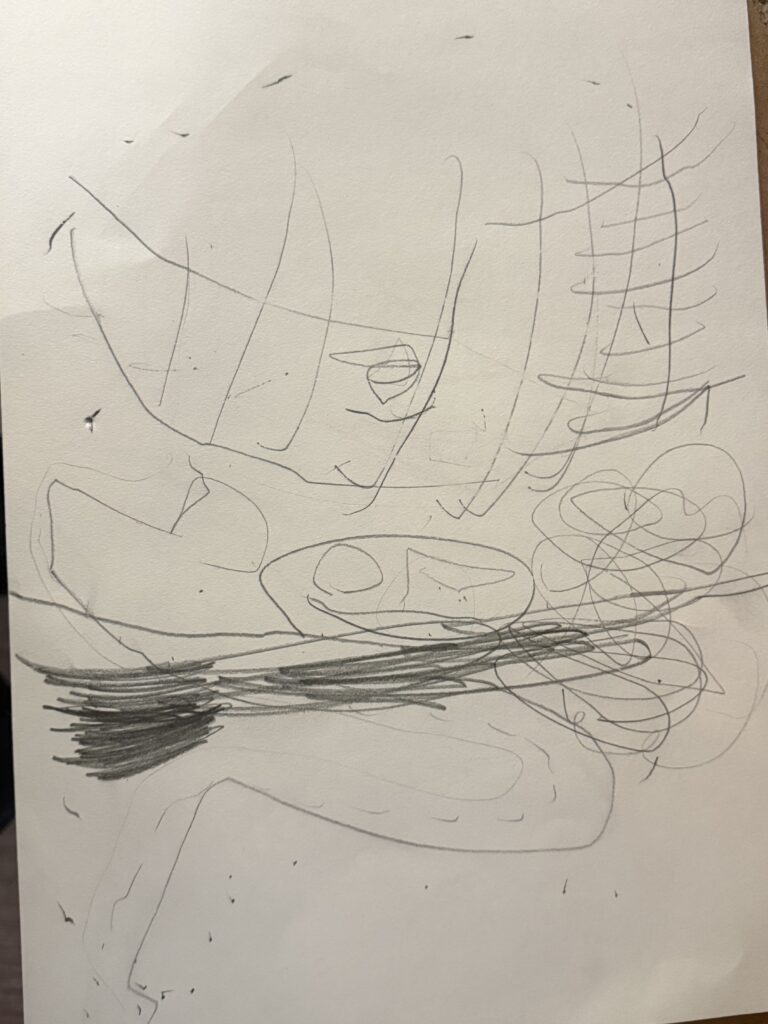
During circle time, children listened respectfully to stories and participated enthusiastically in singing and dancing. These shared experiences strengthened community and relational trust. My responsibility is not only to introduce materials, but to attend to children’s life worlds, emotions, and relationships, as discussed in Conversation XI: Pedagogist’s Engagements in Early Childhood Education Centers. Children demonstrated imagination, collaboration, memory, empathy, spatial reasoning, and problem-solving beyond adult expectation. I witnessed children: design imaginative castles and homes, construct tire houses outdoors and decorate them with chalk, collaboratively build complex block structures, extend ideas across materials (books, sticks, blocks, chalk, drawing), engage respectfully in group dialogue. Children consistently showed that they can think, create, negotiate, and design in ways adults might not predict. My pedagogical commitment is to honor this capability by creating spaces where their ideas are not restricted, where materials remain open, and where I position myself as a co-learner rather than a controller of outcomes.
Third week of my practicum, children’s learning and play continued to develop around the idea of building houses, particularly houses for the mouse. I intentionally supported this emerging interest by offering different materials, revisiting previous ideas, and engaging children in conversations about houses, buildings, and structures. Throughout the week, I observed how children approached materials, shared ideas, and extended their thinking together.
Building remained one of the central interests in the classroom. To support this curiosity, I introduced blocks that were more challenging to balance. Although these blocks were difficult to work with, children were eager to experiment and began building houses for the mouse using them. As they worked, children naturally started discussing ideas related to balance, height, and measurement. When their buildings became unstable, some children suggested using sticks to support and stabilize the structures. Observing this moment was meaningful because children collaboratively problem-solved and explored ways to make their structures stronger. Even when the buildings fell, children remained persistent and continued trying new approaches. Some older children extended the materials further by creating a rocket ship structure, demonstrating how open-ended materials invite imagination and unexpected ideas.
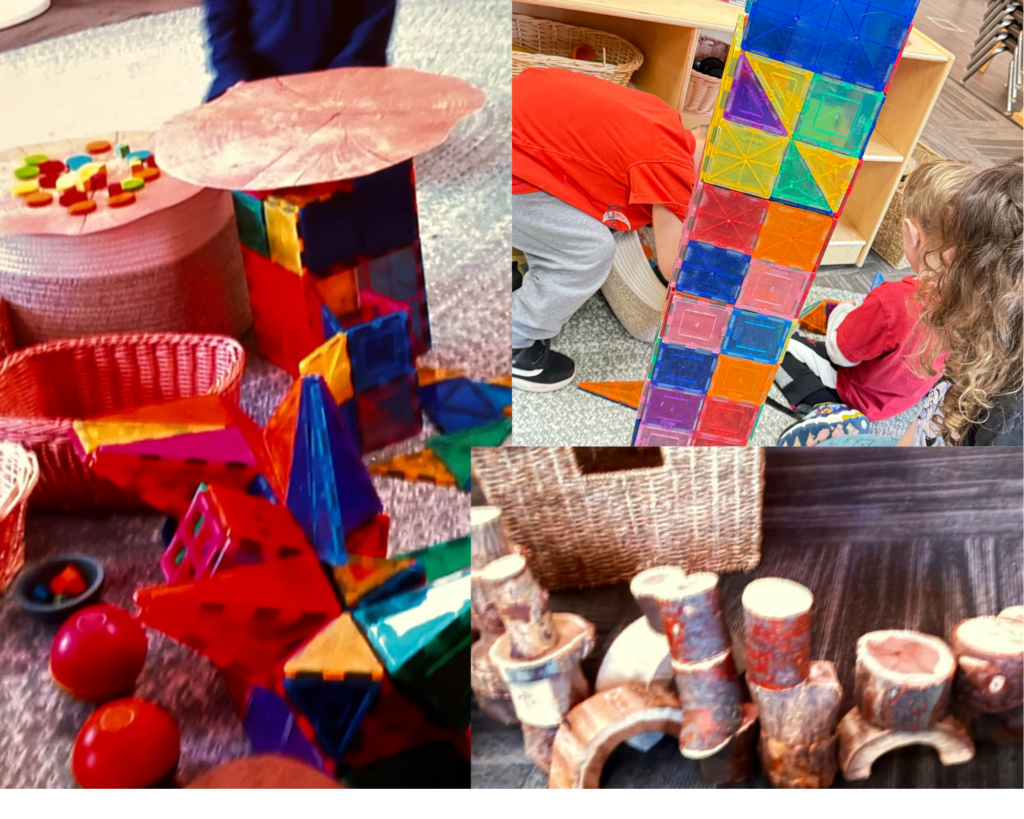
Me: Yesterday you wanted to build a house for the mouse, so today I brought some blocks and the mouse. Why don’t you build a house for it?
Child: Yeahhh, yes! I will build a house for the mouse.
(The child begins stacking and balancing blocks carefully, adding more pieces to make the house bigger.)
Me: I see you are adding many blocks to make the house.
Child: Yes, this is the mouse house.
(One part of the roof starts to move and looks unstable.)
Me: Hmm… the roof is moving a little. How do you think you could balance it?
Child: Wait!
(The child looks around, finds a stick, and places it under the block to support the roof.)
Child: I will use this stick.
Me: Oh, you used the stick to support the roof.
Child: See, now it’s not moving.
(The child gently places the mouse inside the house.)
Child: Don’t disturb the mouse. He is sleeping.
Me: Oh, the mouse is sleeping? Why is he sleeping?
Child: Because it is winter and they sleep.
Me: Oh, like bears and snakes? Is he hibernating?
Child: Yes, he is hibernating! So don’t disturb my mouse and don’t let anyone touch it.
Me: Okay, I will make sure no one disturbs your mouse while he is sleeping.
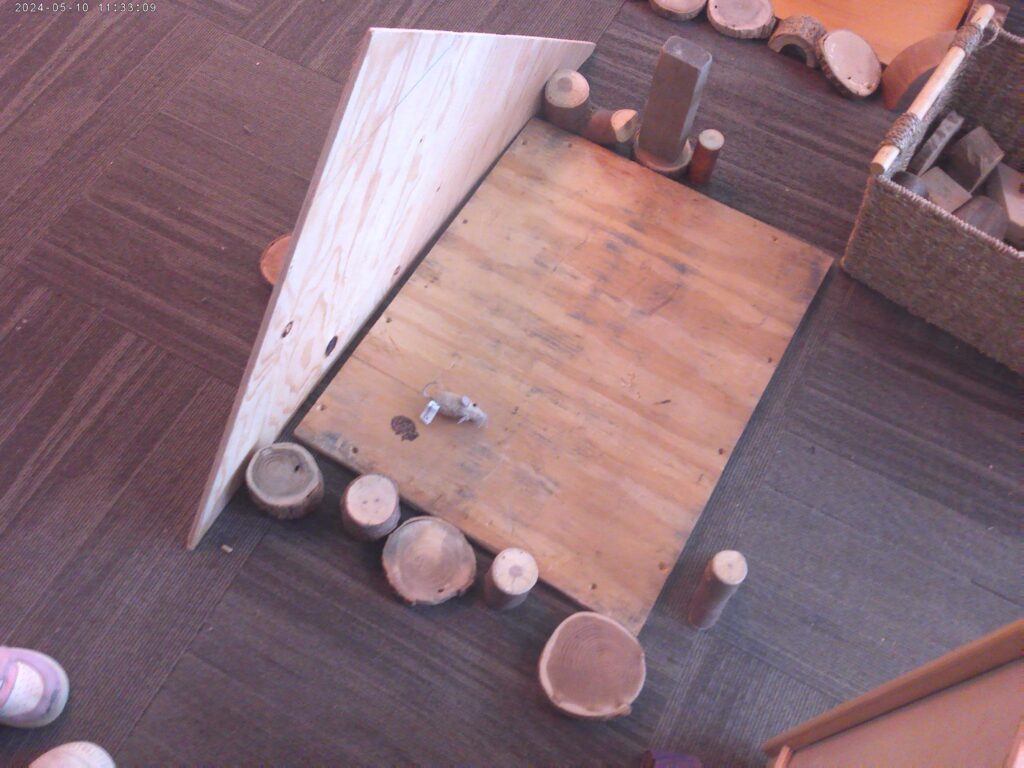
In addition to blocks, I introduced fabrics as another material for creating houses for the mouse. Children immediately became interested in using the fabrics and began draping them over blocks and other materials to create soft shelters and flexible houses. The fabrics allowed children to explore a different way of building compared to the solid structures made with blocks. Over the week, fabrics became one of the materials that children frequently returned to while building. This experience connects with ideas discussed in Encounters with Materials (Pacini-Ketchabaw, Kind, & Kocher, 2024), which suggests that materials are not simply tools but active participants in children’s thinking. The blocks, sticks, and fabrics invited children to experiment, test possibilities, and imagine what a house could look like.
During one outdoor moment, children became curious about the ground and began digging holes in the dirt. They worked together using their hands and tools to dig deeper, discussing what they might find underground and observing the soil. This activity showed how children are naturally curious about the environment and eager to explore the materials around them. Our neighborhood walks also became meaningful learning opportunities during the week. The idea of chimneys first emerged during the second week, but children’s curiosity about them continued to grow and develop this week. During our walk, children began paying closer attention to the chimneys on different houses. They noticed that each chimney looked different and started discussing differences in color, size, and shape. Some children wondered how people could reach the top of rooftops, which led to conversations about height and measurement as children compared different buildings around them. Revisiting this idea allowed children to deepen their thinking and extend their earlier observations. These everyday encounters with the environment reflect the ideas described by Sandra Styres (2011) in Land as First Teacher, where learning emerges through relationships with the land and through children’s attentiveness to the world around them.
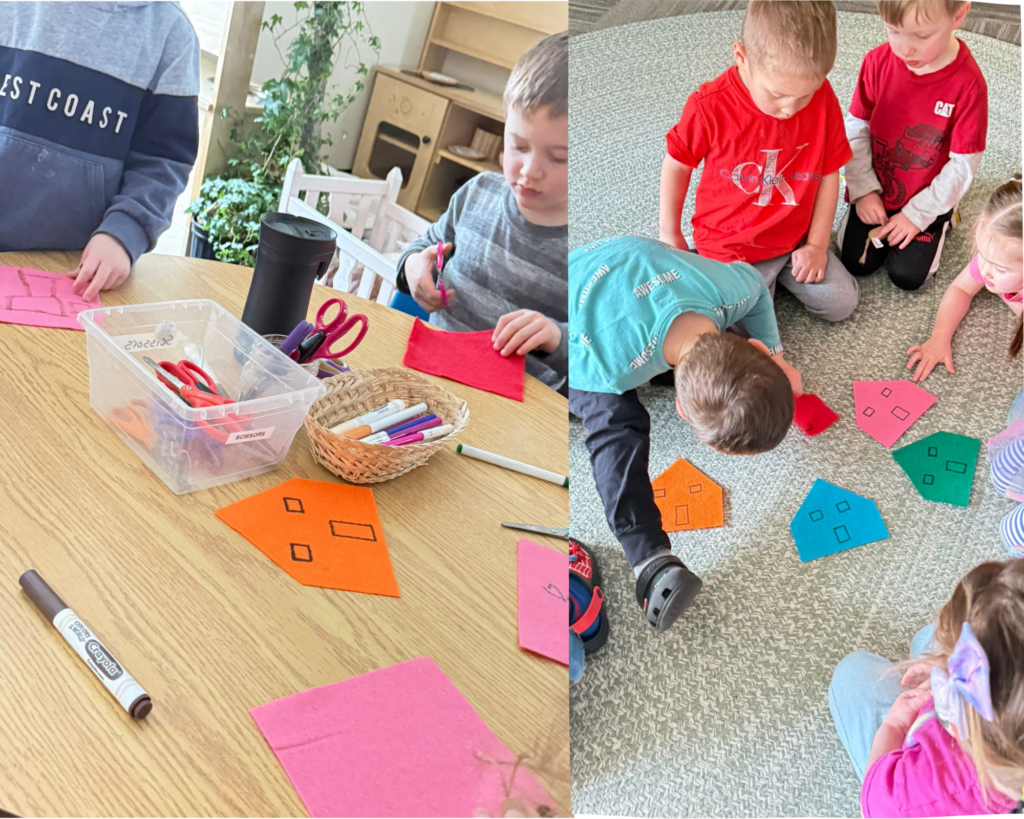
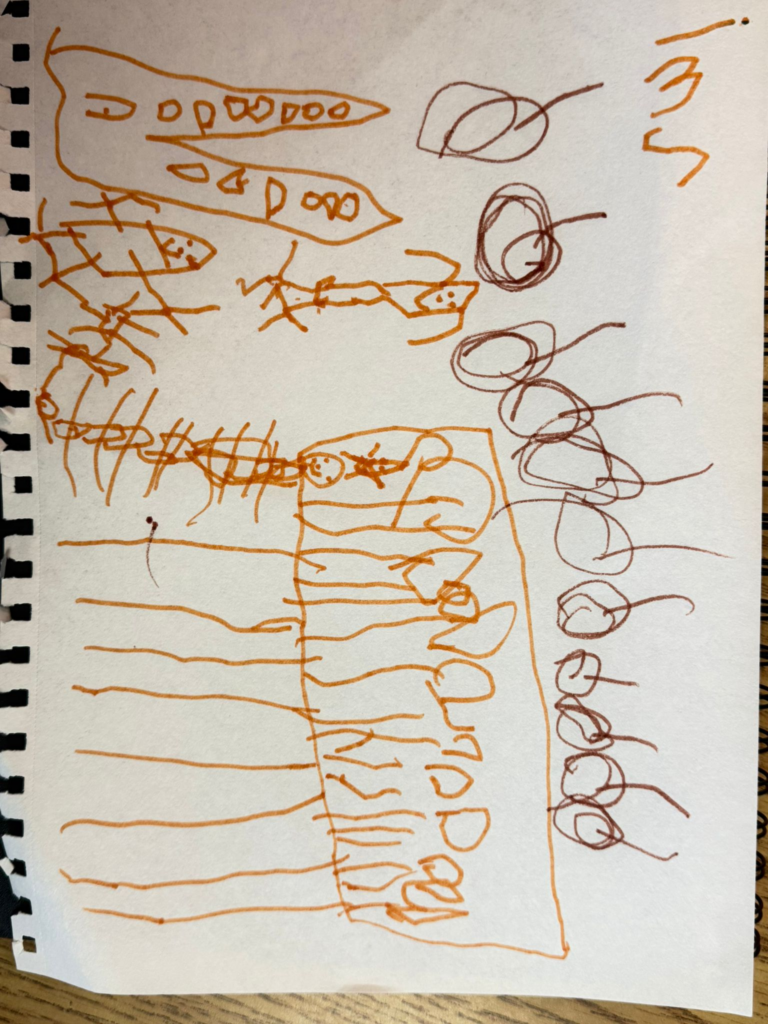
Drawing and mark-making also became an important way for children to revisit and express their ideas. Children practiced drawing with chalk outdoors and also revisited photographs of their earlier constructions, such as tree houses and block houses. I placed these pictures on the table to invite children to reflect on their previous work and create their own drawings. Many children drew cottage houses, tree houses, and other imaginative structures. One child began drawing a tree house, but the drawing gradually transformed into a festival scene with family gatherings and relationships. Observing this moment reminded me that drawing is not simply about representation but about expressing ideas, experiences, and imagination. As discussed in Relational Languages of Mark Making (ECPN, 2025) and Moon Bear: The Night Butterfly – Drawing as Language, drawing can be understood as a relational language through which children communicate their thinking and experiences.
Child: I am making a tree house, the same one that we saw on the walk.
Me: Oh, are you?
Child: Yes! Look, and this is a human.
Me: Oh, a human. Are they related to you?
Child: Yes, they are my family.
(The child continues drawing and adds another building beside the tree house.)
Child: This is my real house.
Me: Oh, so you have a tree house near your real house?
Child: Yes, and we are all going to the tree house for a picnic.
Me: Who is going to the picnic?
Child: My mom, dad, grandpa, and grandma.
Me: That picnic sounds really fun.
Child: Yes, it is fun because it is Halloween. I am drawing pumpkins.
Me: Oh, it is Halloween! Do you decorate the tree house?
Child: Yes, I decorate the tree house.
Child: It was really fun on Halloween.
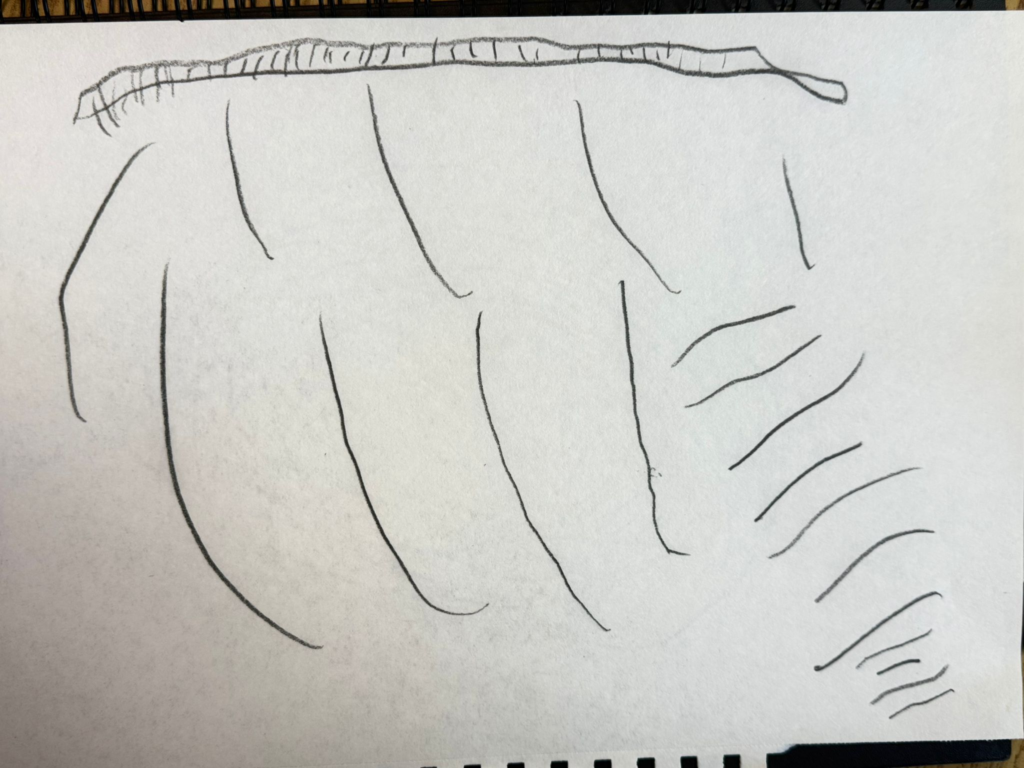
During the week, there were also moments that encouraged me to reflect more critically on my role as an educator. In one situation, I noticed a child who was often described as creating “problems” during challenging moments. Observing this interaction more closely made me reflect on how quickly children’s behaviors can sometimes be labeled without fully understanding the context behind them. This moment encouraged me to think about the importance of approaching children’s behavior with curiosity and reflection rather than judgment. These reflections connect with ideas from Dahlberg and Moss (2007), who challenge educators to move beyond fixed evaluations and instead remain open to multiple interpretations of children’s actions and experiences. Another moment that stood out was when a child was seeking attention and asked educators for hugs, which was declined. Observing this interaction made me think about how children often communicate their emotional needs through their behavior. The child’s request seemed to express a need for comfort, reassurance, or connection. This moment reminded me of how important relationships are in early childhood education and how educators’ responses can shape children’s sense of belonging within the classroom community.
Throughout the week, I also joined children in dramatic play, supporting their engagement and interactions with peers. Children negotiated roles, shared materials, and collaborated with each other as they played. Revisiting previous experiences also became part of the learning process. Children looked again at photographs of their earlier building creations and discussed ideas about houses and buildings. Some children even began talking about creating our own booklet about houses, showing how their thinking about buildings continued to grow and expand. Revisiting children’s experiences in this way reflects ideas from Pacini-Ketchabaw et al. (2015) in Journeys: Reconceptualizing Early Childhood Practices Through Pedagogical Narration, which emphasizes how returning to experiences can deepen children’s thinking and support collaborative learning between educators and children.
Hospital Dramatic Play
Child: You are the patient. Sit here.
Me: Okay, I am the patient.
Child: I will check your fever.
(The child picks up a calculator and places it on my forehead like a thermometer.)
Child: Oh no! Your fever is very high. Look!
Me: Oh really? What does it say?
Child: You have this much fever. You need 11 injections.
Me: Eleven injections? I am afraid of injections.
Child: Don’t worry. You are going to be okay.
Child 2: Yes, the doctor will help you.
Me: If my fever is so high, do I have to stay in the hospital or can I go home?
Child: You can go home.
Child 2: Yes, go home and rest.
Child: But you have to come back tomorrow for another injection.
Me: Oh okay. But what if I get really sick and cannot come to the hospital?
Child: Then we will come to your house.
Child 2: Yes, we will come and give you the injection at your house.
Me: Oh, that is very kind of you. Thank you, doctors.
Overall, this week reminded me that learning emerges through children’s curiosity, relationships, and encounters with materials. The blocks, fabrics, sticks, drawings, and conversations all became part of a shared process of exploration. Children demonstrated persistence, creativity, and problem-solving as they built houses for the mouse and discussed buildings in their community. These experiences reinforced my belief that children are capable and imaginative learners who can construct knowledge in ways that often go beyond adult expectations. As an educator, this week encouraged me to continue listening closely to children’s ideas and to create environments where their curiosity and creativity can continue to grow.
During Week 4 of my practicum, I continued to intentionally align my practice with my pedagogical belief that children are capable, competent, and active learners who construct knowledge through relationships with materials, people, and the environment. This week provided meaningful opportunities for me to reflect on how I revisit children’s ideas, respond to their thinking, and grow in my role as an educator. At the beginning of the week, I focused on reconnecting with children by greeting them and asking about their weekend. This created opportunities for conversation and helped re-establish relationships. Reflecting on this, I began to understand that these everyday interactions are not separate from pedagogy but are foundational to it. As Cristina Vintimilla (2020) explains, pedagogy is deeply relational, and the way educators engage with children shapes their sense of belonging and participation. Throughout the week, I intentionally worked on being more present listening carefully, joining children’s play, and responding to their ideas. I noticed a shift in relationships when children who usually preferred solitary play invited me to join them and asked me to push them on the swing. This moment showed me that trust had developed, and I am beginning to be seen as a supportive and reliable adult.
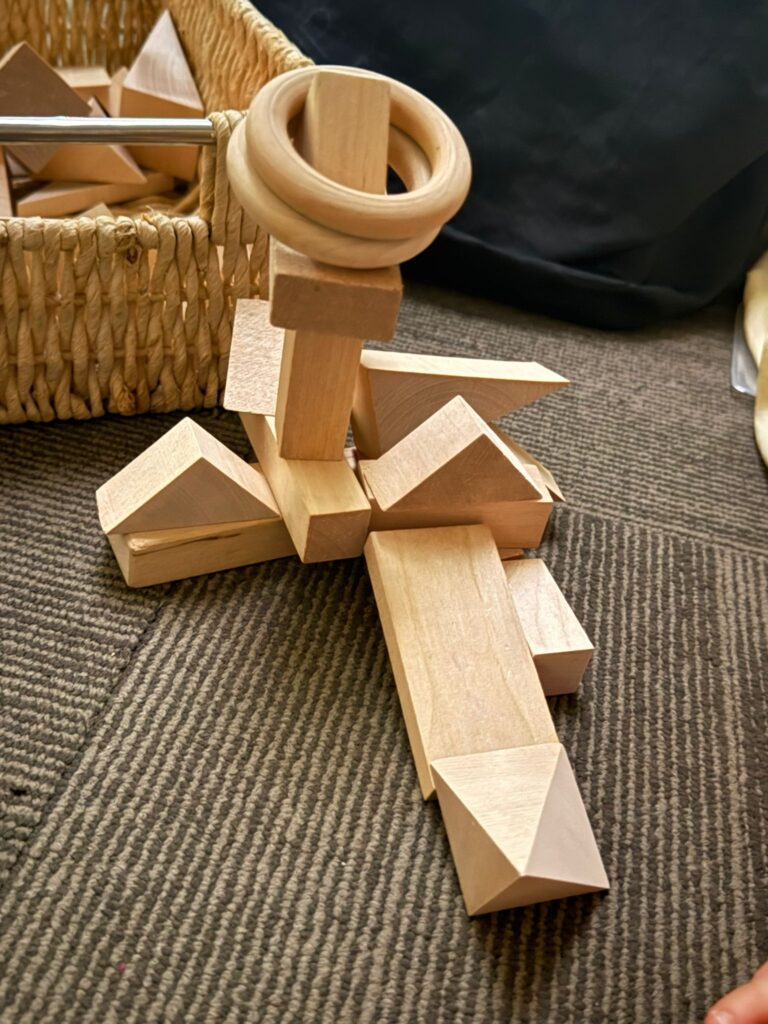
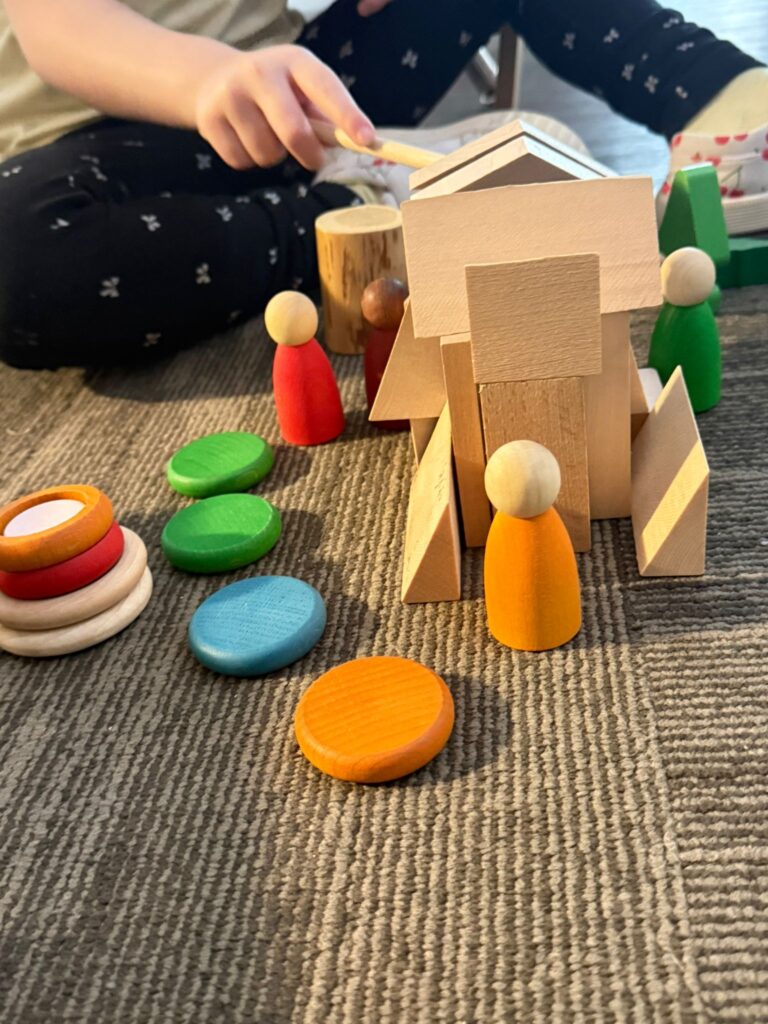
A key pedagogical focus this week was revisiting children’s previous work and materials. We looked at photos of earlier house-building projects and reintroduced materials such as popsicle sticks, cotton, and glue. This time, I extended the experience by introducing ideas about well-known Canadian buildings, including the CN Tower and Parliament Hill. Children became highly engaged and began incorporating these ideas into their constructions, building tall tower-like structures and castle-inspired designs. Through this process, they explored concepts such as height, balance, stability, and representation, while also connecting their imaginative ideas with real-world architecture.
Child 1: What is that big tower?
Me: That is the CN Tower. It is in Canada.
Child 2: We are in Canada too!
Child 3: I live in Kamloops!
Me: Yes, we all live in Kamloops, in Canada. This tower is in Ontario, which is far from where we live.
Child 1: Wow, it is so cool and so tall!
Child 4: (pointing at another picture) Is that a castle?
Me: Yes, it does look like a castle. That is Parliament Hill, and it is also in Canada.
Child 2: Where is it?
Me: It is in a city called Ottawa.
Child 3: What is Parliament?
Me: Parliament is a place where people make rules and decisions for the country.
Child 4: Ohhh… but it looks like a princess castle!
Me: It really does look like a princess castle, doesn’t it?
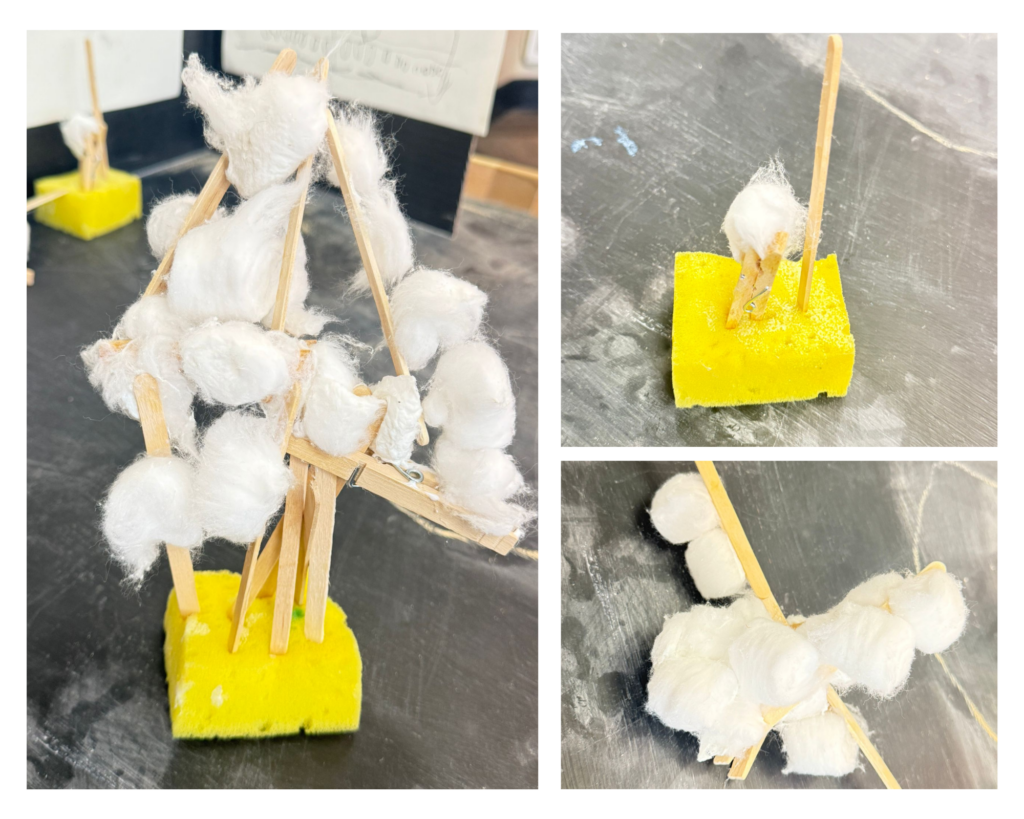
Reflecting on this experience, I recognized that revisiting materials with new provocations allows children to deepen their thinking rather than simply repeat previous experiences. This connects with Encounters with Materials (Pacini-Ketchabaw, Kind, & Kocher, 2024), where materials are understood as holding memory and inviting ongoing inquiry. I am beginning to shift my thinking from planning isolated activities to creating continuity in learning, where children return to ideas and expand them over time. This also aligns with Materials in Early Childhood Education (2024), which emphasizes that learning emerges through relationships with materials rather than predetermined outcomes.
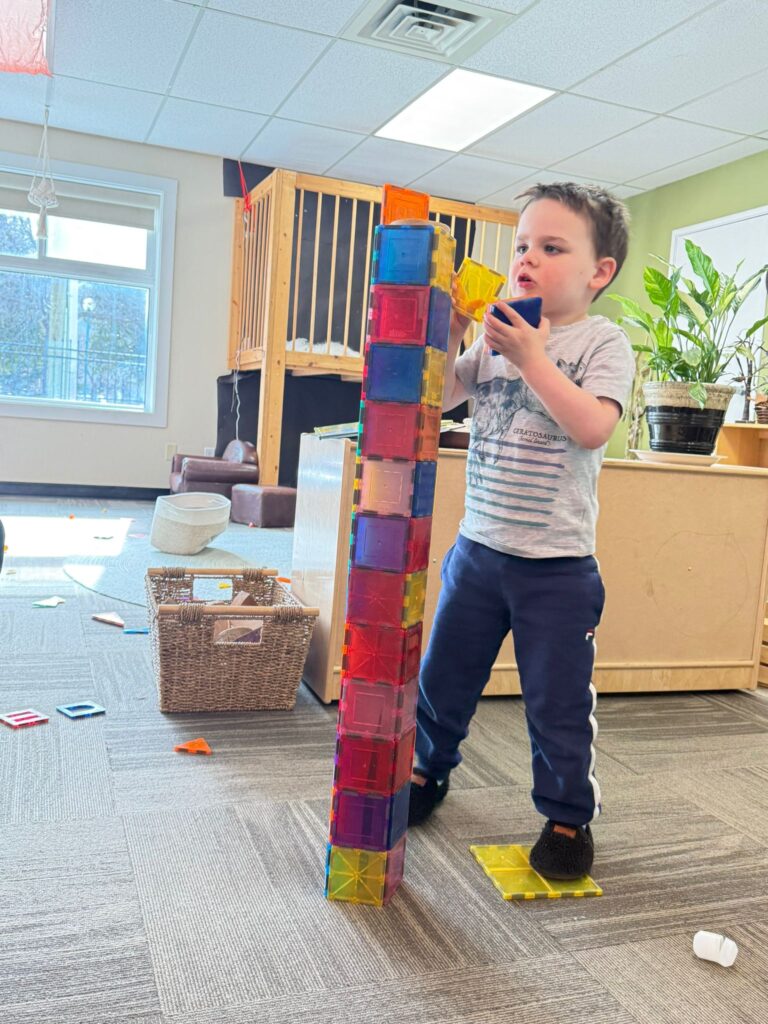
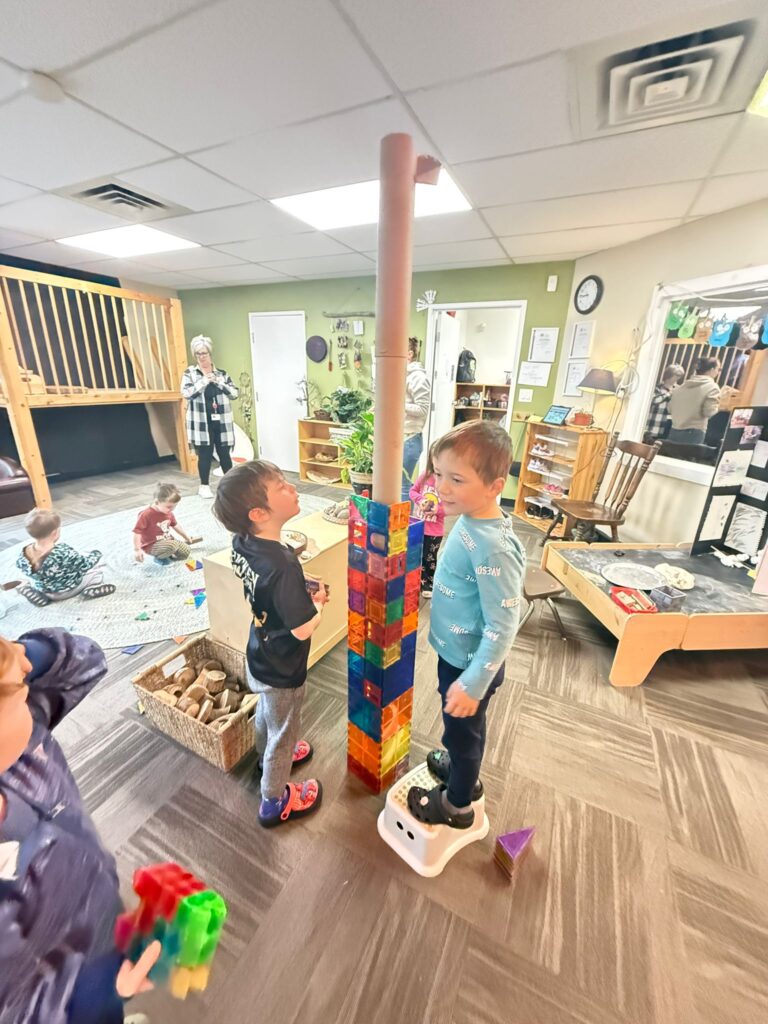
Me: Do you think chimneys are only outside the house, or can they be inside too?
Child 1: I have a chimney inside my house.
Child 2: No, my house doesn’t have one.
Child 1: Some houses have chimneys and some don’t. I mostly saw small houses don’t have chimneys.
Me: That’s an interesting observation. Do you think smoke comes out of chimneys?
Child 3: Yes!
Child 3 (continuing): But also oil.
Child 4: Yes, there might be lots of oil inside the chimney.
Me: Hmm, chimneys are often in kitchens and are made to take smoke out of the house.
Child 5: No, chimneys can be anywhere. I saw a big chimney across the river.
Child 6: That’s not a chimney, it’s a steamer!
Child 1: No, it’s a very big chimney.
Me: It could be a type of chimney.
Child 3: Yeah!
Child 2: Some houses have many chimneys, some have one, and some are tall and some are short.
Me: Yes, that’s a really good observation. What about their colours?
Child 4: I saw a red chimney before. Chimneys have different colours.
Throughout the week, children’s interest in houses and chimneys continued to develop. During discussions, children asked thoughtful questions such as whether rain goes inside chimneys and shared their own theories, including the idea that chimneys might have oil on them. Instead of correcting their ideas, I chose to listen and explore their thinking alongside them. This required me to be comfortable with uncertainty and to value children’s perspectives as meaningful contributions to learning. This experience reflects my growing understanding of an emergent curriculum, as described by Pacini-Ketchabaw and Vintimilla (2020), where learning is co-constructed through dialogue and responsiveness to children’s ideas.
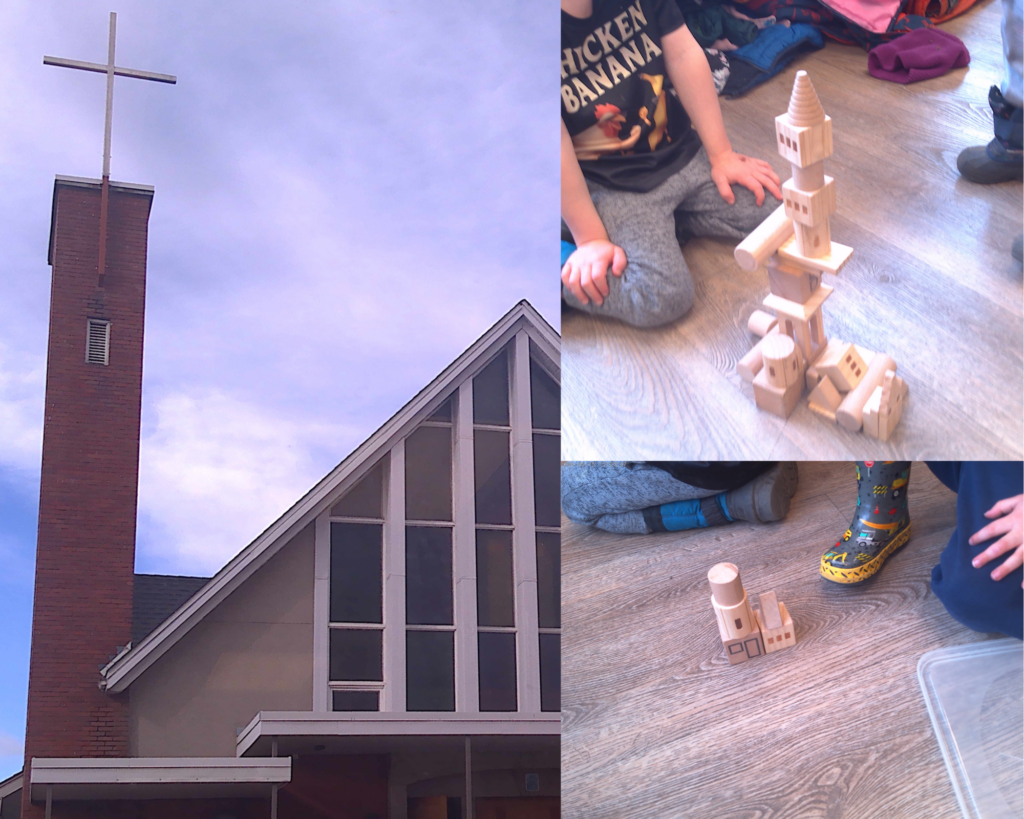
Me: What are you seeing outside the window?
Children: That building!
Me: Hmm, what kind of building do you think it is?
Children: Umm… I don’t know.
Child 1: It looks big.
Child 2: Maybe it’s a house?
Me: It’s a church.
Children: Ohhh, it’s a church!
Child 3: What is a church?
Me: It’s a place where people go for gatherings, prayers, and different events.
Child 1 (while picking up blocks): I am making a church, same as that one!
Child 2: Me too! I want to make one.
Child 3: I’m building a big one.
(Children begin building with blocks, looking outside and then back at their structures.)
Child 1: Look, mine is tall like that one.
Child 2: Mine has a door!
Child 1: But my church will have a chimney.
Child 4: But I don’t see a chimney on that church outside.
Child 1: No, but my church has one.
Me: That’s interesting, you are adding your own ideas to your building.
Child 3: My church is bigger than that one!
Child 2: Mine is small.
Me: I notice you are all building differently, even though you are looking at the same building.
Child 4: Look! Look! We made the same church as outside!
Children (excited): Yeah! It looks the same!
Me: You are all amazing builders.
The week also included two significant community-based experiences that extended learning beyond the classroom. During a visit to an old age home, children brought blocks and engaged in building. They noticed a real church building through the window, which sparked curiosity and led them to recreate the structure using blocks. This experience connected observation, imagination, and construction, while also creating meaningful interactions between children and older adults. On a different day, we went on a community walk to a construction site. Children carefully observed the environment and asked questions about wiring, construction processes, and how buildings are made. They also discussed house sizes and structures, connecting these observations to their classroom experiences.
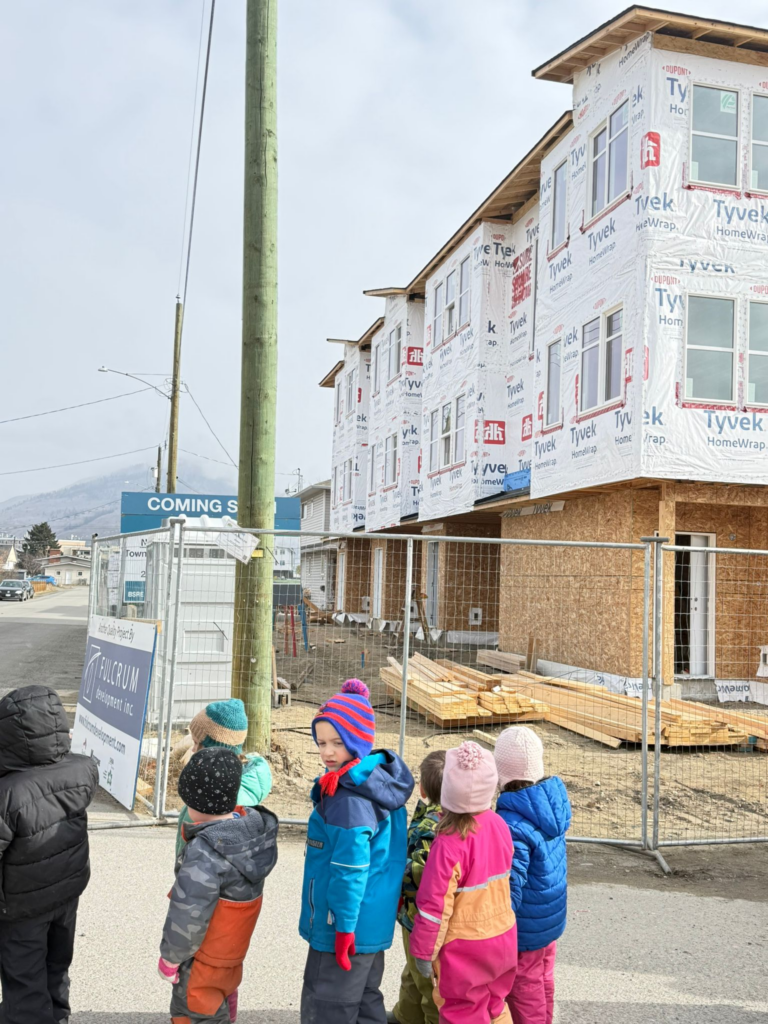
Child 1: What is wiring? The worker said they are doing wiring.
Me: Hmm, what do you think wiring might be?
Child 2: Is it like building something?
Me: That’s an interesting idea. Wiring is when people put special wires inside the house that help bring electricity, like light to different rooms.
Child 3: How do they bring light to the house?
Me: When a house is being built, workers fix wires inside the walls in different rooms. These wires connect to switches and lights, so when we turn on a switch, the light comes on.
Child 1: Wires? I don’t see wires in my house, but my lights still turn on!
Me: That’s a great observation. The wires are actually hidden inside the walls, so we can’t see them, but they are still there working.
Child 2: Ohhh, they are inside the walls!
Child 3: Like hiding?
Me: Yes, they are hidden, but doing an important job.
These experiences helped me reflect on how learning emerges through relationships with the environment and community. This connects with Sandra Styres (2011) , Land as First Teacher, which emphasizes that learning is relational and grounded in place. It also aligns with Emergent Dialogues (2025), which encourages educators to value children’s questions and engage with real-world contexts. I began to understand that taking children into the community is not just an activity but a pedagogical decision that supports deeper, more meaningful learning.
Another important area of growth for me this week was taking on increased responsibility and leadership. I led morning snack and lunchtime routines, which required organization, responsibility, and confidence. I also participated more actively in circle time, including telling a childhood story without notes. Although this felt challenging, it helped me step outside my comfort zone and engage children in new ways. These experiences contributed to my growing confidence and helped me see myself as a more capable educator.
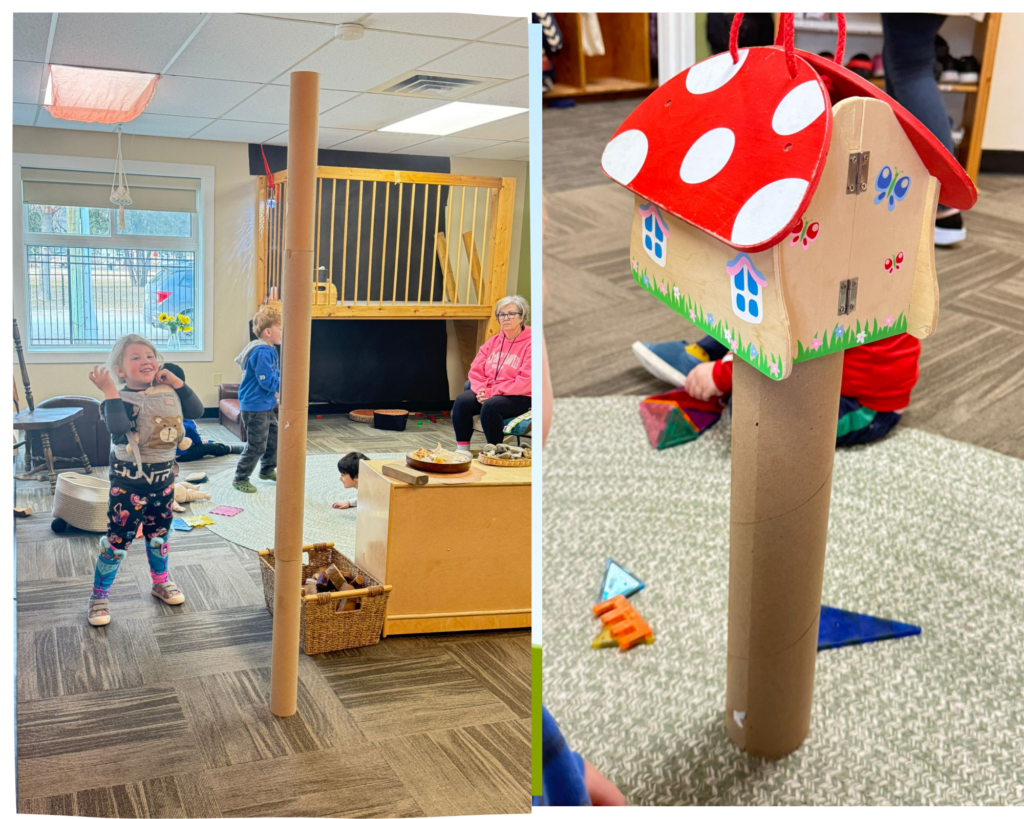
Working with the cardboard pipe as a new material also provided valuable insights into my pedagogical approach. Children explored the pipe by dropping balls, building tall towers, and creating tunnels. They experimented with balance and stability, often facing challenges when structures collapsed. Instead of providing solutions, I supported their problem-solving by encouraging them to test ideas and persist. This experience reinforced my understanding that learning happens through experimentation and persistence, which aligns with perspectives in Encounters with Materials (2024).
Throughout the week, I also supported children in conflict resolution and emotional situations. I encouraged children to communicate, take turns, and think of fair solutions when conflicts arose. In one situation where a child felt left out, I supported them in expressing their feelings and reconnecting with peers. These moments made me reflect on inclusion as more than participation, it is about creating a sense of belonging. This connects with Taylor and Giugni (2012) in Common Worlds, as well as Gerlach, Newbury & Berggren (2024), which highlight the importance of addressing experiences of exclusion in early childhood settings.
A particularly meaningful moment for me was sharing cultural and religious architecture from Nepal with the children. The children showed curiosity and asked questions, creating a space for dialogue and cultural exchange. This experience helped me reflect on how my identity as an educator contributes to children’s learning. It connects with Emergent Dialogues (2025), which highlights the ethical and political dimensions of education and the importance of bringing diverse perspectives into the classroom. I also reflected on the importance of collaboration among educators, especially on the day when the regular educator was absent. I noticed how classroom routines and balance shifted, which highlighted the need for strong communication and coordination among educators. This connects with Pacini-Ketchabaw and Kummen (2022), who describe pedagogy as something that emerges through dialogue and collaboration within teaching teams.
By the end of Week 4, I can clearly see my growth as an educator. I have moved from primarily observing to actively engaging with children, supporting their ideas, and taking on responsibilities within the classroom. I am becoming more confident in my interactions and more reflective about my practice. Most importantly, I am learning to align my actions with my belief that children are capable learners and that meaningful learning emerges through relationships, materials, and experiences. Overall, this week deepened my understanding that pedagogy is about co-constructing knowledge with children, being responsive to their ideas, and creating opportunities for meaningful engagement with the world. I am continuing to grow as an educator by learning to listen, reflect, and think alongside children.
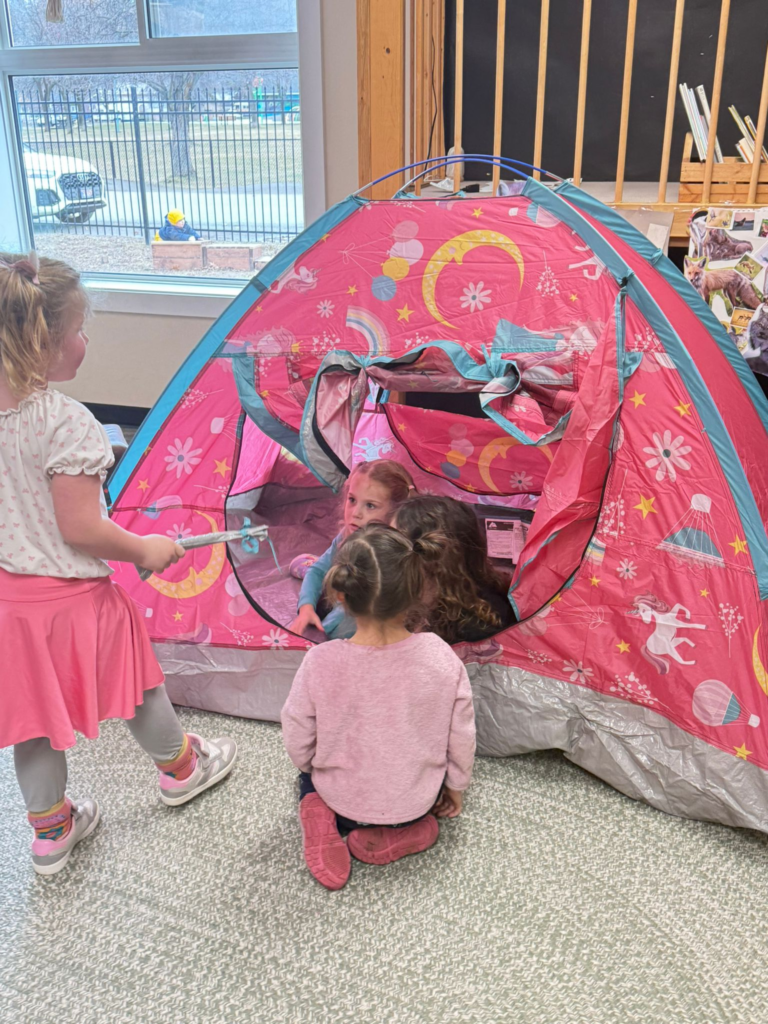
During my final week of practicum, I focused on deepening children’s ongoing interest in buildings, houses, and materials while also taking on greater responsibility as an educator. We revisited children’s previous work, including their drawings, constructions, and shared discussions, where children showed excitement and strong recall of their learning. Building on this, I introduced a tent house as another form of home. While children were highly engaged, I later reflected on the need for clearer planning and inclusive participation, as the space was limited. I responded by creating a turn-taking system, ensuring that all children had the opportunity to participate. This experience highlighted the importance of intentional planning for inclusion.
Throughout the week, I also took on a leadership role in the absence of my mentor and another educator, guiding routines and supporting children’s learning experiences. Outdoor play and walks continued to be meaningful, where children engaged in imaginative play such as creating campfires, climbing trees, and observing their environment. During one walk, children noticed a paper factory and became curious about how paper is made. This led to a discussion about how paper comes from trees and is transformed through processes within the factory, demonstrating how curriculum can emerge from children’s everyday encounters. I also introduced pipe cleaners as an open-ended material, and children used them in unexpected and creative ways, such as making houses, forests, chimneys, and symbolic representations. This reinforced my understanding of how materials invite creativity and thinking beyond predetermined outcomes.
Child 1: Wow! What’s that building?
Me : That’s a big factory! Hmm… I wonder what they make inside. What do you think?
Child 2: Candy!
Child 3: Or chocolate!
Me: Those would be yummy, but this one makes… paper!
Children: Paper?!
Child 1: Like our drawing paper?
Me: Yes! The paper we draw on comes from this factory. Can you guess where paper comes from before it’s paper?
Child 2: Trees?
Me: That’s right!
Child 3: But how they make it paper?
Me: The machines flatten it into paper.
Child 1: Machines? I want to see!
Me: Yeah, I also wish we could see it together.
Child 2: I would love to watch the trees turn into paper!
Child 1: I have big paper at home!
Me: That’s amazing!
On my final day, I focused on relationships by spending intentional time listening, playing, and engaging in meaningful conversations with children. Rather than creating a formal goodbye, I chose to keep the day as normal as possible while leaving behind a photo book of their building work and a painting as a way to sustain connection and memory. I also expressed gratitude to my mentor and fellow educators for their support throughout my learning journey.
Reflecting on my entire practicum, I recognize significant growth in my understanding of pedagogy. At the beginning, I viewed activities and materials as ways to engage children; however, over time, I began to see them as part of a larger relational and pedagogical process. Children consistently demonstrated that they are capable, competent, and active learners who construct knowledge through their interactions with materials, people, and the environment. This understanding aligns with Encounters with Materials and Materials in Early Childhood Education, where materials are seen as active participants in meaning-making. I also developed a deeper appreciation for how learning is connected to place and community. Experiences such as outdoor exploration, community walks, and observing real-world structures supported children’s curiosity and inquiry, reflecting ideas from Land as First Teacher and Common Worlds Reconceptualizing Inclusion in Early Childhood Communities. Additionally, I became more aware of the importance of inclusion, equity, and responsiveness in my practice. Moments like the tent house experience helped me understand that inclusion requires intentional decision-making, connecting with critical perspectives such as Beyond Quality in Early Childhood Education and Care. Most importantly, I have come to understand pedagogy as relational and ethical work. Building relationships with children, listening to their ideas, and engaging as a co-learner became central to my practice. This reflects perspectives from What is Pedagogy and Weaving Pedagogy in Early Childhood Education, where pedagogy is understood as an ongoing, reflective, and responsive process.
Overall, this practicum has been a transformative experience. I am leaving with a stronger understanding that my role as an educator is not to direct learning, but to create inclusive, meaningful, and responsive environments where children’s ideas can grow. In my future practice, I will continue to value children as capable learners, remain open to their perspectives, and engage in reflective and relational pedagogy that supports their curiosity, creativity, and sense of belonging.
References
Dahlberg, G., & Moss, P. (2005). Ethics and politics in early childhood education. RoutledgeFalmer.
Early Childhood Pedagogies Network. (2025). Emergent dialogues. Course material.
Early Childhood Pedagogies Network. (2025). Pedagogists and educators engaging in ethical-political dimensions in early childhood education. Course material.
Early Childhood Pedagogies Network. (2025). Relational languages of mark making. Course material.
Early Childhood Educators of British Columbia. (2019). Code of ethics. https://www.ecebc.ca/application/files/6915/7697/1982/ECEBC_Code_of_Ethics.pdf
Gerlach, A. J., Newbury, J., & Berggren, J. (2024). Experiences of unbelonging and ableism in the early learning and child care sector in British Columbia. Canadian Journal of Education.
Government of British Columbia. (2008). Community care and assisted living act. https://www.bclaws.gov.bc.ca/civix/document/id/complete/statreg/02075_01
Government of British Columbia. (2007). Child care licensing regulation, B.C. Reg. 332/2007. https://www.bclaws.gov.bc.ca/civix/document/id/complete/statreg/332_2007
Government of British Columbia. (2019). Early learning framework (2nd ed.). Ministry of Education and Child Care. https://www2.gov.bc.ca/assets/gov/education/early-learning/teach/earlylearning/early_learning_framework.pdf
Ineese-Nash, N. (2020). Disability as a colonial construct: The missing discourse of culture in conceptualizations of disabled Indigenous children. Disability & Society, 35(3), 399–414. https://doi.org/10.1080/09687599.2019.1609805
Pacini-Ketchabaw, V., Kind, S., & Kocher, L. L. (2024). Encounters with materials in early childhood education. Routledge.
Pacini-Ketchabaw, V., Nxumalo, F., Kocher, L. L., Elliott, E., & Sanchez, A. (2015). Journeys: Reconceptualizing early childhood practices through pedagogical narration. University of Toronto Press.
Pacini-Ketchabaw, V., & Vintimilla, C. (Eds.). (2020). Weaving pedagogy in early childhood education: On openings and their possibilities. Routledge.
Styres, S. (2011). Land as first teacher: A philosophical journeying. Reflective Practice, 12(6), 717–731. https://doi.org/10.1080/14623943.2011.601083
Taylor, A., & Giugni, M. (2012). Common worlds: Reconceptualizing inclusion in early childhood communities. Contemporary Issues in Early Childhood, 13(2), 108–119. https://doi.org/10.2304/ciec.2012.13.2.108
Vintimilla, C. (2020). What is pedagogy? In V. Pacini-Ketchabaw & C. Vintimilla (Eds.), Weaving pedagogy in early childhood education: On openings and their possibilities. Routledge.